I start with a disclaimer; this is largely hypothesis, not theory, not having been tested anywhere that I know of, because I've not found anyone else looking at things quite this way. It is s statement of my current beliefs, given the available evidence that I have seen. I reserve the right to change my mind about any portion of it if that evidence, once provided, contradicts my beliefs. I am a rationalist, not a dogmatist. My opinions on the subject have already changed several times over the course of my lifetime.
The Problem Of Gender Studies.
Well, part of the problem is that people are binary. Not in essence, but in their desire for simplicity. In this case it boils down to an argument, for most people, between essentialism and nominalism. That is, that you can define the genders, or that they are an arbitrary and coincidental set of culturally-defined definitions. My main predicate is that it is neither, and both. Sometimes things are both very simple, and complicated, as layer upon layer forms a complex web of interaction. In the world of maths they are called fractals. Examples of fractal systems are feathers, trees, and evolution. A branching of a fractal may be simple, but layered upon itself it quickly becomes staggeringly complex.
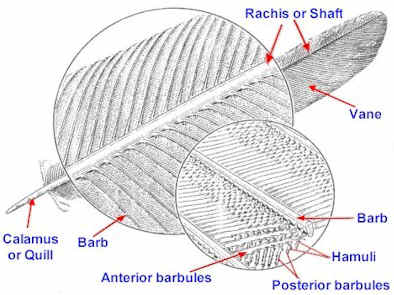

What I want to show you here is that the notion of gender may well be equally complex. Because it isn't merely a matter of being born male or female, or even being brought up as male or female, but an interaction of many competing factors. There are those that will take each one of these as the sole arbiter of definition. Sorry, but life isn't that simple.
The Inverse Bell Curve.
When looking at probabilities in normal populations, the expectations of your results normally fall within normal distribution, or the classic bell curve shape:
Take IQ, or liking for cheese; or the ability to run: any one of these, in a large enough population, would be expected to fall within the bell curve for a population, with a small number of people unable to run at all, a roughly equal number able to run at Olympic standard, but the majority of us being able to manage a hearty jog for a bus if necessary. The position of the bell curve may move up and down on the graph, and it does not prohibit the possibility of extreme outliers. Einstein and Newton would not fit on the average IQ graph, but it doesn't stop the average elementary school teacher being able to grade on a curve.
When we come to the division between gender the first thing to realise is that this is not a simple yes/no divide to any particular characteristic. Like most things, it falls within a bell curve. This time, though, the curve is flipped over:

Where for any given definition of male or female, the majority is clearly male or female, but many others are a little less one and a little more the other. Some are not definitely one or the other, except by minute and obsessive examination. There will be some outliers that are neither, but they can be largely ignored (except insofar as, of course, they will be seized upon by those desperate to support a binary position).
Technically, it isn't actually an inverse bell curve at all, but two standard deviations side by side. Within the male and female archetypes there exist within statistical significance outliers at both ends of the extreme. The majority of men are not Arnold Schwarzenegger. The majority of women are not Paris Hilton. The IBC only displays a line from the average across into the other gender, a line down and through androgyny, not a line from the most stereotypical man to the most stereotypical woman, neither of which is typical at all.
Some things, of course, that people choose to use as definition are actually irrelevant to the picture. The ability to produce semen, for instance, is a clear sliding result that doesn't then move into female territory once it hits zero. And few people would count post-menopausal women as no longer female. Such things will have an effect on people's psyche, but often the person involved is unaware of them, so for the purposes of this I will ignore them.
I've not included sexuality, as I concede that this one is going to have a very distorted, lopsided, curve, depending on how one defines it. As Kinsey first revealed, though, there is a large variation in the gender characteristics that we are trained (usually accidentally) into being attracted to. If we see sexuality as being defined by the gender one is attracted to, the majority of men are attracted to women, and vice versa, a few are attracted to both, but more again are attracted to the same perceived gender as themselves. If we chose to define male and female purely by the set of people we would be interested in sleeping with, we might well get a similar curve, but it would not have equal sides. There may well be a way of redefining sexuality, divorced of gender norms, that does yield a more familiar graph.
To take a few examples of defining factors:
1) Body
This one is the one that most people tend to accept as definitive. Born with a penis? You're male. Born With a vagina? Female. Finished, done.
Except of course genitals are not visible in our day-to-day lives. In western cultures, in fact, we have a massive taboo about revealing them. If they were visible, opinions on this might be a whole lot different. Genitals themselves come in a range of shapes and sizes. A penis can go from micro to porn star size. A vulva, probably subject to less evolutionary selection, can have a huge range of dimensions to its various structures, including enlarged clitorises that resemble small penises. At the middle of the range are those we term intersex, with structures that are neither obviously one or the other, or even with both.
More importantly, though, are secondary sexual characteristics, because they affect the way we interact with the world. Most men tend to be, for instance, strong, tall, broad and muscular, while women tend to be the opposite. But of course there are men in the middle of the graph that are weak, slow, small, and slim. There are women that are strong, tall and muscular.
Most importantly, there are characteristics we use to read whether someone is male or female, the first ones that trans people seek to alter. Facial hair on men. Breasts on women. The body and facial shape.These things don't actually alter that much how you interact with the world, but they do influence how the world interacts with you, which brings us to the second factor:
2) Culture And Identity
We treat men and women differently, the world over. The more we identify, and are identified, as a gender the more stereotypically we are treated. The culture we identify with depends on how strongly we were indoctrinated with it as a child, and continue to be as an adult. The mere fact that we define male and female as different social entities encourages us to think of ourselves in those terms, and thereby limits our thinking. Perforce any definition I put in this category will sound like I am stereotyping behaviour; but that, indeed is just the point. We do have cultural archetypes for masculine and feminine; the sport-obsessed, beer swilling, lustful male; the fashion obsessed, chocaholic, virginal female. For many of these characteristics there is an observable though frequently denied population correlation, but there are people who cross the gender divide in them.
In most things that simply means that people regard themselves as exceptional in that single regard. Equally though there are those that take these as an aggregate, and regard themselves as a whole as a little less female, a little more male, or vice versa, and a very few in the middle of the graph who see themselves as neither gender at all.
3) Psychology and Brain-Sex
I've lumped these two in together, because whilst they do work in slightly different ways, they each have an effect upon the other that means for the purposes of most adults they may as well be treated as one.
It has been fairly well established that men and women think in different ways. We have different intellectual strengths, and pleasures. Dissection of male and female brains yields observable differences in, for instance, the limbic systems and parietal lobes. But these are not hard differences congruent to the genital make-up. They operate more on a congruence akin to the inverse bell-curve type. The mere fact of having more female structures and thinking processes does not automatically make one's identity female, though. For a long time finding these structures was treated as the key to explaining homosexuality, for instance, which has nothing at all to do with gender identity. There are people who whilst acting and thinking one sex, have a body and an identity which is very strongly the other.
It has not yet been clearly established whether these brain structures are something that one is born with, or whether they are constructed during our early formative years by the immediate cultural influence of our guardians. Whichever it is is relatively unimportant, once set they appear to be unable to be changed by immediate cultural conditions.
Conclusion
The point of all of this is that we must understand that there is not one single set of criteria that makes one male or female. It is an overlapping set of criteria, all of which influence the way we are, and the way we understand ourselves. While we live in a society that considers gender as important, rather than individual characteristics, we have identities that form how we think of ourselves. In that sense, the notion of gender is a cultural construct, but that does not mean that there are not factual gender differences.
I'll return to this later, and fill in citations and elaborate based on feedback.

No comments:
Post a Comment